How to Secure Emergency Food Stamps: A Guide to Finding Rapid Assistance
When times are tough and the pantry's bare, knowing how to secure emergency food stamps can make all the difference. Being caught in a financial bind is never easy, but understanding your options for emergency assistance can provide much-needed relief. Whether it's due to an unexpected job loss, a medical emergency, or any other crisis, this comprehensive guide aims to clarify the process of obtaining emergency food stamps and the steps you can take to ensure you and your family get the support you need.
Understanding Food Stamps and SNAP
What Are Food Stamps?
Food stamps, known officially as the Supplemental Nutrition Assistance Program (SNAP), provide financial assistance for those who need help purchasing food. This program is federally funded and managed at the state level. SNAP benefits are loaded onto an Electronic Benefit Transfer (EBT) card, which functions similarly to a debit card, allowing recipients to buy eligible food items at participating retailers.
The Purpose of SNAP
SNAP's primary goal is to alleviate hunger and improve nutrition by increasing food purchasing power for low-income households. This program plays a crucial role in supporting families during financial hardships, ensuring they have access to basic food necessities.
When to Apply for Emergency Food Stamps
Identifying Urgent Need
Emergencies can happen unexpectedly, leaving individuals and families vulnerable. Situations such as natural disasters, sudden unemployment, or medical crises can lead to immediate financial distress. If you find yourself facing such circumstances, applying for emergency food stamps can provide temporary relief until more long-term solutions are established.
Eligibility Requirements
Most states have criteria for expedited SNAP benefits. Typically, these qualifications include:
- Income and resources: In general, households must meet specific income thresholds. Assets are also considered, though certain resources may be exempt.
- Residency: Applicants must reside in the state where they're applying.
- Citizenship status: Generally, applicants must be U.S. citizens or qualified non-citizens.
Documenting Your Need
When applying, you'll need documentation to support your application, such as proof of income, residency, and identification. Gathering these documents in advance can help streamline the process.
How to Apply for Emergency Food Stamps
Where to Start
The process typically begins at your local Department of Social Services or equivalent state agency. Many states now offer online applications, making the process more accessible and less time-consuming.
Steps to Apply
Locate your local SNAP office: Use online resources or contact your state agency to find the nearest SNAP office.
Gather necessary documents: Collect proof of identity, income, and other relevant information.
Submit your application: You can apply in-person, online, or sometimes by mail. Present your case for expedited service.
Complete an interview: Most states require a phone or face-to-face interview to clarify and confirm application details.
Await decision: States must process expedited applications within seven days. Keep in touch with your SNAP office for updates.
Tips for a Smooth Application Process
To ensure a smooth application process, keep these pointers in mind:
- Be prompt: Start your application as soon as possible especially if experiencing financial distress.
- Be thorough: Complete your application accurately and provide all necessary documents.
- Be proactive: Follow up on the status of your application and be prepared to provide additional information if requested.
Additional Support Options
Food Banks and Pantries
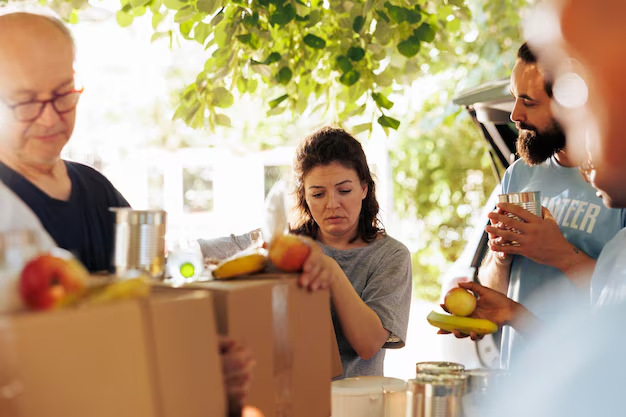
While waiting for your benefits, local food banks and pantries can be a valuable resource. They offer food assistance without the need for formal applications or waiting periods.
Community Kitchens
Community kitchens provide prepared meals and can be an immediate source of nourishment. These kitchens often require no proof of income or residency, allowing anyone in need to access meals.
Other Government Programs
Explore other state and federal assistance programs, such as WIC (Women, Infants, and Children) or temporary cash assistance, which complement SNAP benefits to bolster food security.
Navigating Challenges and Changes
Adapting to SNAP Policies
Be informed about SNAP policy changes that may impact your benefits. Programs often evolve, and staying educated on updates ensures you maximize your entitlement.
Managing SNAP Benefits
Once you receive benefits, create a budget to make your resources last throughout the month. Prioritize essential purchases and take advantage of sales and discounts at participating retailers.
Frequently Asked Questions
How Quickly Can I Get Help?
Emergency SNAP benefits are typically processed within seven days. However, this timeframe can vary depending on the state and volume of applications.
Can Only Low-Income Families Apply?
Generally, SNAP is aimed at low-income households, but emergency situations can adjust typical eligibility criteria to provide relief.
What Can I Purchase with SNAP Benefits?
SNAP benefits cover groceries such as fruits, vegetables, dairy, meat, and grains. They cannot be used for alcohol, tobacco, or non-food items like toiletries.
What If My Situation Changes?
If your financial situation improves or worsens, promptly inform your SNAP office to adjust your benefits accordingly.
Summary: Key Steps to Emergency Food Stamps 🌟
- Act Swiftly: Begin your application at the first sign of financial distress for expedited processing.
- Gather Essentials: Compile necessary documentation such as ID, proof of income, and residency.
- Use Available Resources: Rely on food banks, pantries, and community kitchens for immediate food support.
- Stay Informed: Keep up-to-date with SNAP policy changes and manage your benefits wisely.
Closing Insight
Navigating the emergency food stamps process during a financial crisis can be daunting, but understanding the steps and resources available empowers you to take swift, effective action. A little preparation can go a long way in securing the nutrition you and your family need to weather the storm. Always remember, support is available, and reaching out for it is a step towards greater stability and security.
Related Topics
- Am I Eligible For Food Stamps
- Are Food Stamps Being Cut
- Are Food Stamps Federal Or State
- Are Food Stamps Frozen
- Are Food Stamps Funded By Taxpayers
- Are Food Stamps Going Away
- Are Food Stamps Income Limits
- Are Food Stamps Paused
- Are Illegal Aliens Eligible For Food Stamps
- Are Illegal Immigrants Eligible For Food Stamps
