Navigating Your Way Through WIC: How to Qualify and Get Started
For many families across America, the Women, Infants, and Children (WIC) program serves as a vital resource in times of economic uncertainty. Whether you're pregnant, a new mom, or a guardian to young children, understanding how to qualify for WIC can ensure you receive essential nutritional support. This guide aims to unravel the complexities surrounding the qualification process and provide clear, actionable information to empower you on your journey to accessing WIC benefits.
What is WIC and Why is it Important?
WIC is a government nutrition program established to support pregnant women, new mothers, infants, and young children up to age five. It provides nutritious foods, nutrition education, and referrals to health and other social services. The goal is to promote healthier pregnancies and outcomes, improve the nutrition of infants and children, and provide a stronger foundation for early development.
Key Benefits of WIC:
- Nutritious Foods: Access to milk, cheese, eggs, cereals, fruits, vegetables, whole grains, and infant formula.
- Nutrition Education: Guidance on healthy eating, breastfeeding, and food preparation.
- Health Referrals: Connection to healthcare services like immunizations or health screenings.
Who is Eligible for WIC?
Determining eligibility for WIC involves meeting several criteria—primarily residential, income, and categorical eligibility.
1. Residential Requirement
To qualify for WIC, you must reside in the state where you’re applying. The program is federally funded but operated by state agencies, meaning each has its specific procedures.
2. Categorical Eligibility
WIC targets particular demographic groups:
- Pregnant women
- Postpartum women (up to six months after delivery)
- Breastfeeding women (up to the infant’s first birthday)
- Infants
- Children under five years old
3. Income Guidelines
Your income must fall at or below a certain level set by the federal poverty guidelines. States may adjust these guidelines slightly, so it’s important to check the specific requirements in your state.
Here's a simple breakdown of what you need to focus on:
| Household Size | Maximum Monthly Income |
|---|---|
| 1 | Varies by state |
| 2 | Varies by state |
| 3 | Varies by state |
| 4+ and more | Each additional member adds more to allowable income |
Note: Certain forms of financial aid, such as housing subsidies, may not be counted as income for WIC eligibility.
📍 Important Tip:
Families already participating in other programs like SNAP or Medicaid might automatically meet the income requirements for WIC.
How to Apply for WIC
Ready to apply? Here’s a step-by-step guide to streamline the process:
Step 1: Locate Your Nearest WIC Office
Start by finding your nearest WIC office, which you can usually locate via your state’s health department website. Many areas cover several locations to ease access.
Step 2: Gather Necessary Documents
Be prepared with:
- Proof of income (pay stubs, tax return)
- Proof of residence (utility bill, lease)
- Identification (government ID, driver’s license)
Step 3: Schedule an Appointment
WIC appointments may be scheduled online or by phone, depending on your locality. Be sure to arrive on time and may need to bring your children for nutritional assessment.
Step 4: Complete the Nutritional Assessment
Part of WIC's qualification involves a nutrition assessment carried out by healthcare professionals to determine specific nutritional needs and tailor benefits accordingly.
Understanding the WIC Process: A Parent's Experience
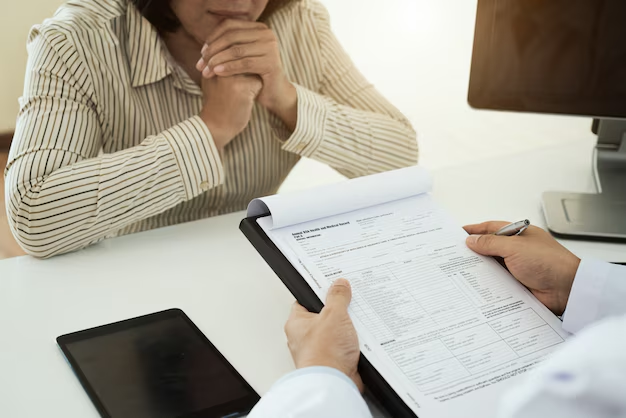
Scenario: Imagine you're a soon-to-be mother living in a household of three, with a combined monthly income below the state threshold. After identifying the nearby WIC office, you gather your most recent pay stub, your rental agreement, and your driver’s license for verification.
The Application Experience
You promptly schedule a WIC appointment for next week, making sure to bring your toddler along, as requested. At the appointment, a specialist conducts a brief nutritional assessment to determine specific benefits tailored to your family’s needs.
What You Gain in Return:
- An EBT card, much like a debit card, pre-loaded with nutritional food credits each month.
- Tailored nutritional guidance regarding pregnancy, breastfeeding, and early childhood nutrition.
- Ongoing support services and education, empowering you to make informed dietary choices during your pregnancy and beyond.
Frequently Asked Questions About WIC
Is WIC Only for Low-Income Families?
While WIC primarily serves low-income families, the program takes a comprehensive approach where both income and nutritional risk are considered. In some cases, moderate-income families with specific health needs might qualify.
What Happens if My Income Changes?
It's important to report significant changes in your income or household size, as this can affect benefits. For many families, WIC benefits adjust accordingly—even during mid-certification periods—to ensure support continuity.
Can WIC Benefits be Used for Other Needs?
Apart from purchasing feeds, WIC benefits are not transferable for non-approved items such as diapers or formula-related equipment. However, partnerships for additional social services are often available.
Key Takeaways for WIC Applicants
To wrap it up efficiently, here's a visually structured summary to keep in mind as you navigate the WIC application process:
📝 Quick Summary for Applicants
- 💼 Residential Eligibility: Must apply in the state you live in.
- 👶 Categorical Requirements: Pregnant women, new mothers, infants, and young children qualify.
- 💲 Income Criteria: Household income must fall within the specified limits (often similar to SNAP/Medicaid).
- 📅 Application Process:
- Locate the nearest WIC office.
- Gather required documents.
- Schedule and prepare for the appointment.
- 🔄 Review of Benefits: Stay informed if income or household conditions change.
Empowering communities, WIC stands as an instrumental tool fostering health and well-being for future generations. With the right guidance, qualifying and applying for benefits becomes a straightforward, rewarding enterprise.
As you gather courage to make that first step to your local WIC office, recall that the real power lies not in the benefits themselves, but in the improved health and nutrition outcomes they work to nurture. Best of luck on your journey to securing a healthier future for you and your family.