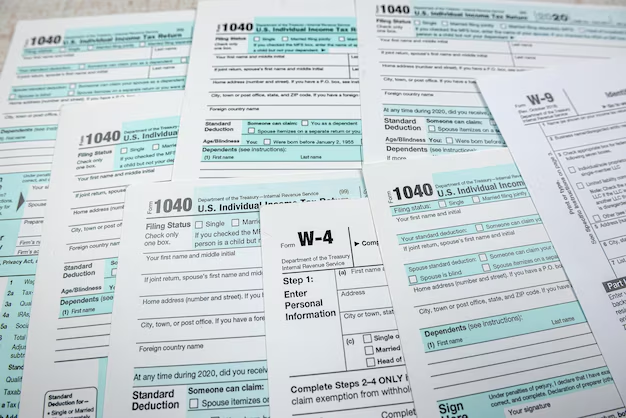
Navigating the Maze of IRS: Where to Send Your Form 1040
For many Americans, tax season can be a stormy sea of forms, numbers, and looming deadlines. Among the crucial items on that list is the all-important Form 1040, the U.S. Individual Income Tax Return. But here's a common question that often flies under the radar: "Where exactly do I send my completed Form 1040?" Worry not! We're about to embark on a clear and engaging journey to guide you through this maze, ensuring your tax return finds its way precisely where it needs to go.
Understanding Form 1040 and Its Importance
Before we dive into the specifics of mailing your Form 1040, let's take a brief moment to understand its purpose. Form 1040 is the heartbeat of your tax return if you're an individual taxpayer. It reports your annual income, claims deductions and credits, and ultimately decides whether you owe additional taxes or receive a refund. The IRS has multiple forms in the 1040 series, but the standard Form 1040 is the most commonly used.
Key Types within the 1040 Series:
- Form 1040: The standard form for individual taxpayers to file their tax returns.
- Form 1040-SR: Tailored for individuals over 65, with larger print and simplified equations.
- Form 1040-NR: For nonresident aliens filing a tax return in the U.S.
Understanding which form applies to you is the first step in ensuring your filing process goes smoothly.
Determine Your State of Residence
Why Your State Matters
Where you live – or your tax residence – plays a pivotal role in determining where to send your Form 1040. The IRS has specific addresses for different states to streamline the processing of returns. Therefore, the next step is identifying your state of residence, which is generally where you spent the most time during the tax year.
Residents vs. Non-Residents
The distinction between residents and non-residents can affect where you mail your Form 1040:
- Residents will typically send their returns to designated IRS locations based on their state's guidelines.
- Non-residents often have separate processing locations and potentially different forms to complete.
Filing Methods: Paper vs. Electronic
You've filled out your Form 1040 and are raring to go. But first, let's address how you'll be sending it.
Electronic Filing: A Convenient Option
In today’s digital age, e-filing is a popular choice. It offers a swifter, more streamlined process to get your Form 1040 directly in the IRS's hands, with confirmation upon receipt. Most tax preparation software guides you seamlessly through this process, and the IRS even offers Free File options for individuals under a certain income threshold.
Benefits of E-Filing:
- Quicker Processing: Your tax return is processed faster.
- Immediate Confirmation: Get instant alerts on return status.
- Less Room for Error: Built-in checks reduce mistakes.
Paper Filing: The Traditional Route
Some taxpayers still prefer paper filing, either by choice or necessity. If you're in this boat, understanding where to send your physical Form 1040 is crucial.
Tips for Paper Filers:
- Use a reliable mailing service that offers tracking.
- Double-check your address for accuracy.
- Ensure you have the correct postage.
Where to Send Your Paper Form 1040
IRS Processing Centers
The IRS has several processing centers scattered across the country, and where you send your Form 1040 depends greatly on your home state and whether you're enclosing a payment.
Here's a simplified view of potential mailing scenarios:
- If Enclosing Payment: Mail your Form 1040 with payment to a specific IRS address applicable to payment submissions.
- If Not Enclosing Payment: A different address may apply if you don’t owe extra taxes.
Visual Summary: Mail Destinations by Situation
| State | Address for Payment Enclosures | Address for No Payment |
|---|---|---|
| Alabama, Georgia, Florida | Example Address A | Example Address B |
| California, Colorado | Example Address C | Example Address D |
| New York, New Jersey | Example Address E | Example Address F |
🔍 Tip: Double-check the IRS's website for the most current and accurate address details.
Navigating Special Circumstances
Integrated Locations for Military and International Taxpayers
- Military Members: Specific guidelines exist for military personnel, with instructions based on their deployment.
- International Taxpayers: U.S. citizens or residents living abroad have unique filing addresses and potential forms, such as the 1040-NR.
Handling Expired Identification Numbers
If you've changed your name, or if your Individual Taxpayer Identification Number (ITIN) has expired, it may impact your filing. Ensure your records are up-to-date before mailing your Form 1040.
Common Mistakes to Avoid
Avoiding common pitfalls can simplify your tax season ordeal:
- Wrong Address: Feeling overwhelmed by state-specific addresses? Check directly from the IRS's authoritative sources rather than third-party sites.
- Incomplete Forms: Double-check every field, even in sections that seem mundane.
- Missed Deadlines: Aim to submit early to avoid last-minute mishaps.
💡 Pro Tip: Keep a personal copy of your Form 1040 and tracking numbers from any mailed documents for your records.
What Happens After Mailing?
Following Up
If you’ve mailed your Form 1040, give the IRS ample time to process it. Waiting times can vary, but typically range from a few weeks to a couple of months, depending on when filed.
Tracking Your Refund
If you anticipate a refund, the IRS offers tools like "Where's My Refund?" that help track its status.
Concluding Insights
Successfully sending Form 1040 involves knowing your form, your filing status, and exactly where to send that crucial document. By keeping these guidelines in mind, you can ensure a smoother tax season experience and focus on the relief that comes with completing your tax obligations.
🎯 Final Checklist:
- Identify Your Filing Status – Resident, Non-resident, Military, International.
- Choose Filing Method – E-file or paper file.
- Confirm Your IRS Destination – Verify IRS address as per your situation.
- Validate Your Information – Triple-check details before submission.
- Monitor Your Submission – Use tracking services and IRS tools for peace of mind.
With this knowledge, you'll navigate your tax journey with confidence and clarity. Happy filing! 🗂️